Studio Practice & Philosophy.
This is the studio philosophy. Not a treatise, not a manifesto. A few paragraphs about how I work, what I expect from my paintings, and the kind of relationship I want to have with the person who looks at them.
Why does the painter paint?
The painter does not paint to finish a picture. The painter paints because painting is what the painter wants to do.
Most artistic discourse focuses on the end result: the artwork, the finished piece, the saleable object. This approach misunderstands the heart of painting.
The act of painting is the goal in itself. The movement, the decision, the uncertainty, the searching. The moment when the brush meets the surface. The blending of colours. The unfolding of form. The acceptance of a mistake. The discovery of a new direction.
A painting is not an endpoint. It is a trace. The trace of a particular time spent in front of a canvas. A document of the thinking, the choices, the doubts and the resolutions.
Painting in this sense is not production. It is a way of being.
Every brushstroke is a decision. Every choice of colour is a stance. Every detail left out is a conscious selection. A painting is nothing more than a sequence of decisions, and these decisions are themselves the act of creation. The viewer who looks at a painting is in fact looking at decisions. Looking at thinking. Looking at the presence of a person, even if the painter is no longer there.
When is a work finished?
A painting is never finished. A moment simply arrives when I decide to stop.
I do not stop because the painting has run out. Not because there is nothing more to do. I stop because that moment has run out, the state of mind, the focus, the energy that belonged to this particular work.
Conventional thinking holds that a painting is finished when everything is rendered, when there are no mistakes, when it has become beautiful. This view is misleading. Who decides what is rendered? Who declares what counts as a mistake? And beauty, is that an objective category?
Finished is not a property of the painting. Finished is the painter's decision.
The unfinished is not a lack. The sketch is not a preparatory note. Openness is not a flaw. When the texture of the canvas shows through, when the underdrawing peers through the paint, when the edges of the composition remain unsealed, this does not signal that I failed to complete the work. It signals that I chose to stop where the painting still breathes.
I leave it where it still breathes.
The overworked painting is dead. The painting left open breathes. A work is finished when presence has been born. When the thinking shows. When the viewer can step in.
The viewer's place
The viewer's task is not to interpret. The task is to look in.
For centuries the institutions of art have taught the viewer to understand the work. To search for symbols. To identify the story. To place the piece in the context of period, style, and technique. This approach has its uses for historical and educational study. It misses the point entirely when the question is what a work actually does.
A work is not a coded message awaiting decryption. A work is a space one can enter.
The painting says nothing. It echoes.
What the viewer sees in a painting is not about me, the painter. It is about the viewer themselves. The painting is a surface onto which the viewer projects their own contents. A mirror in which the viewer meets their own inner world. This is why the same painting can be read in a hundred different ways, not because the painting is ambiguous, but because viewers are different.
I call this way of working Meta-resonance. The principle is simple: a work does not transmit meaning. It sets meaning in motion. It does not tell the viewer what to feel. It does not teach, does not explain, does not narrate. It is simply present, and the one who tunes in resonates with it.
A work is like a singing bowl of consciousness. It only sounds when you are present.
The unfinished, the sketch-like quality, the visible decisions, all serve to leave space. Where the painter has not closed something off, the viewer can step in. The over-sealed painting excludes the viewer. The open painting invites them. I do not make finished pictures. I keep painterly states open.
The style I work in
Classical mastery and the freedom of style-blending.
Painting demands two things at once. First, a deep familiarity with materials and techniques: oil, acrylic, charcoal, linen canvas, gesso, solvents, glazes, the handling of the brush. Second, the freedom of painterly thinking, which does not commit to a single movement but blends languages where the painting itself calls for it.
I call this combination Syncrealism. The word combines syncretism with realism. Syncretism in art means the blending of two or more movements, the layering of their visual languages. In Syncrealism, one of those movements must always be realism, providing the stable, secure painterly foundation. Around it, one or several other languages enter: abstract, expressive, symbolic, gestural use of material.
Realism is the focus. Style-blending is the breath.
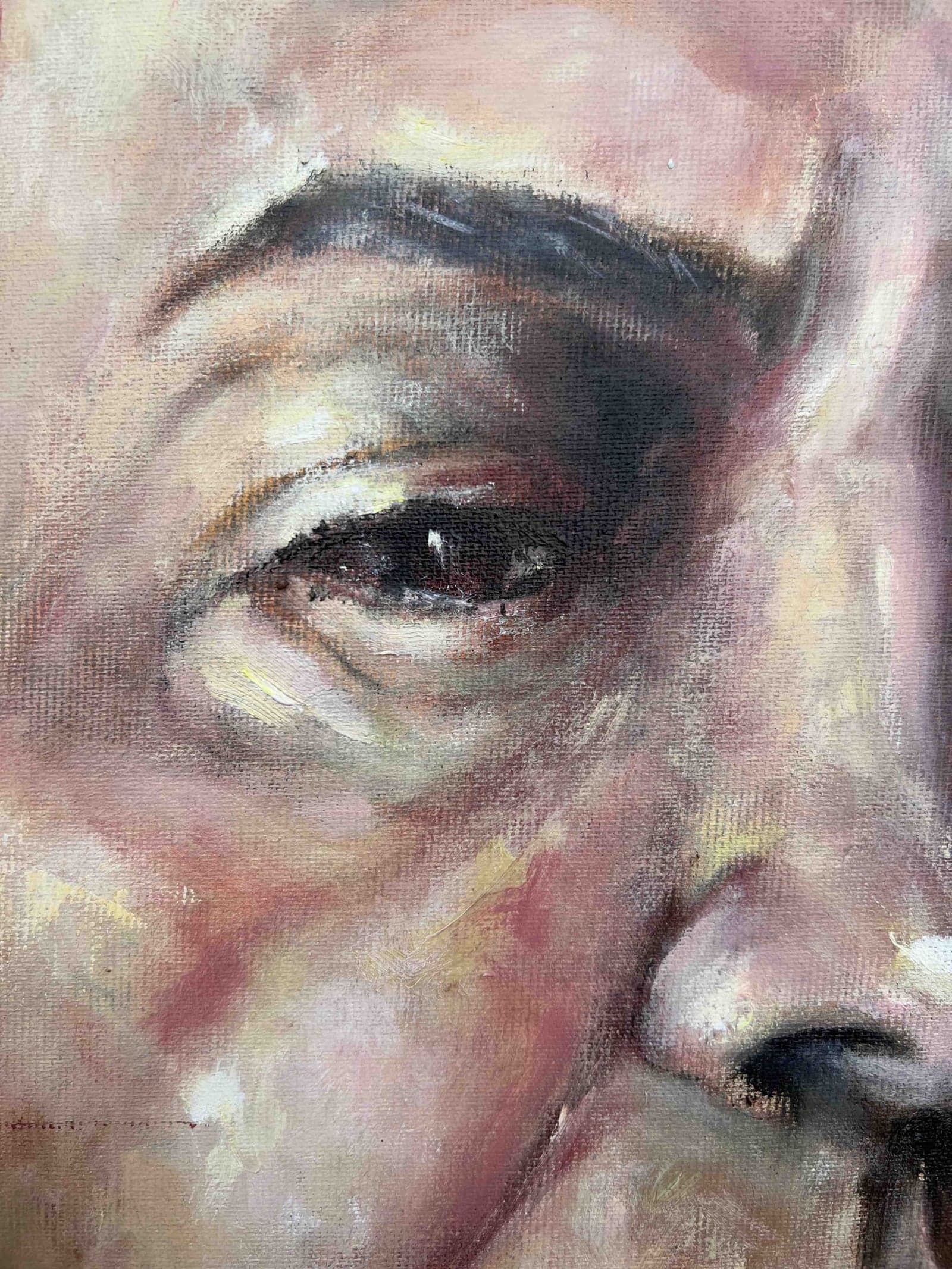
Syncrealism is not a decorative gesture. It is the visual voice of the content beneath. There is a focal point in the composition where rendering is academically rigorous, detailed, realistic. Moving away from it, the painting releases. Forms dissolve into brushstrokes, into patches, into energy. The canvas shows through. The underdrawing peers up. The first painted layer remains.
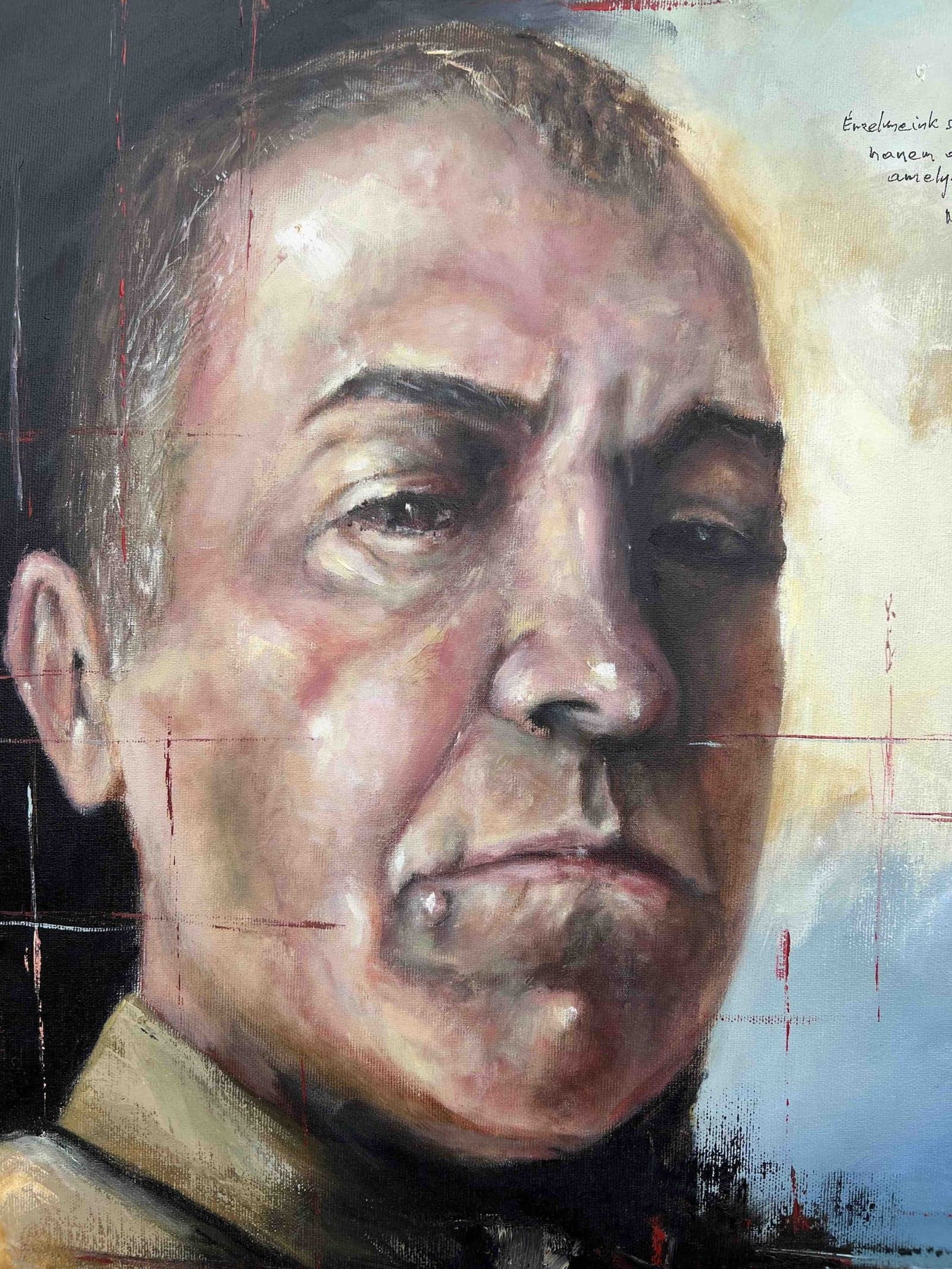
My paintings search for this duality. The fire motif on the red and black field of the Amor Fati self-portrait, the Greek letters psi and phi placed beside the portrait of Anima Fragmentum, the construction lines that remain on the canvas, all are part of this approach. The painting wants to be both formed and breathing at once.
I named the style in 2022. The conceptual framework was finalised together with a painter and conservator-restorer.
How the painting is born
The work of painting is not mystery. It begins with material, builds itself through decision, and ripens into state. The canvas is not an empty surface but a surface the underdrawing has already touched with sign. The paint is not flawlessly smoothed substance, it is layers, the residue of one moment laid into the next. The brushstroke is decision, and it stays where I made it.
A painting is strong when it holds focus and holds release at once. Where the edges of the painting remain open, the viewer can step in. Where the gaze settles, the painting looks back.
The world as image
The painting does not assert, does not judge, does not narrate. It mirrors.
The world we live in is not a neutral background. Whatever we react to is, in some way, calling something back inside us. Not only people, not only relationships, not only artworks, but the world as a whole behaves as a mirroring surface. We truly look at something only when we recognise within it what was already in us.
For the man, the woman is a mirror. For the woman, the man is a mirror. A landscape, a colour, a room is also a mirror. And the painting is one in particular.
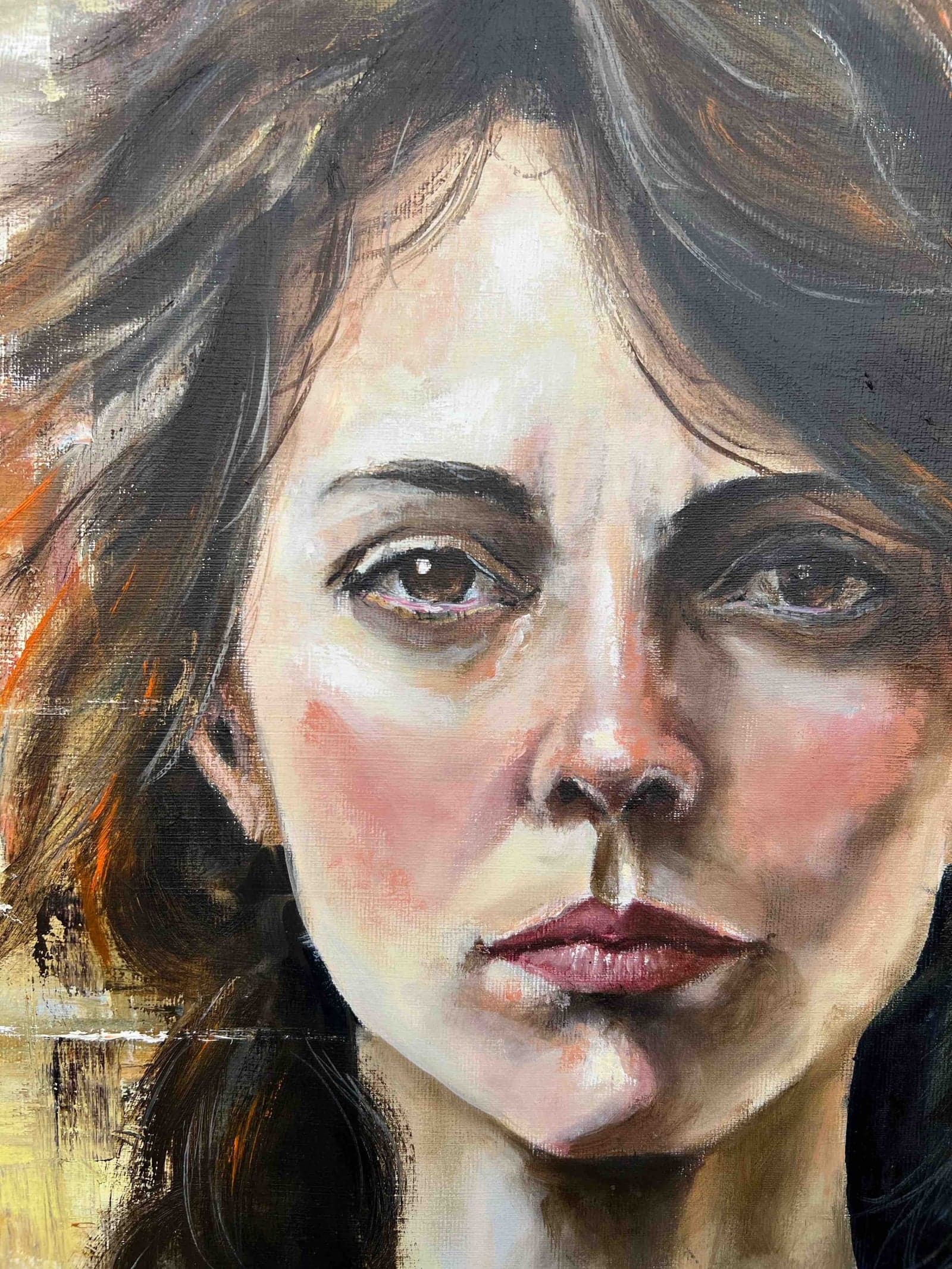
My paintings move within this space. The self-portraits do not record physical likeness. They record an inner state. The Amor Fati is a portrait of the conscious acceptance of fate, stoic insight given visual form. The Anima Fragmentum is its companion, the portrait of the unconscious feminine, in the Jungian sense. Together the two trace an inner path, from recognition toward integration.
This is why what the painting depicts matters less than how it mirrors. The motif is not there for itself, but as a reflective surface. The viewer reads their own state from it. They see themselves in it.
The painter does not paint to finish a picture. The painter paints because painting is what the painter wants to do. The act of painting is the goal.
A painting is never finished. A moment simply arrives when I decide to stop.
The viewer's task is not to interpret. The task is to look in. The painting says nothing. It echoes.
What the viewer sees in it is not about me. It is about themselves.
I do not make finished pictures. I keep painterly states open.
If you have a question, or if you would like to talk about a particular painting, please get in touch.