I am Krisztián Nagy. In the studio, KINVA.
I have been working as a full-time painter since 2007. I paint, I teach, and I research the materials of painting in my own studio in Sükösd, Hungary. The sensual beginning of painting traces back to my fourth year, beside a piece of window putty and the scent of linseed oil.
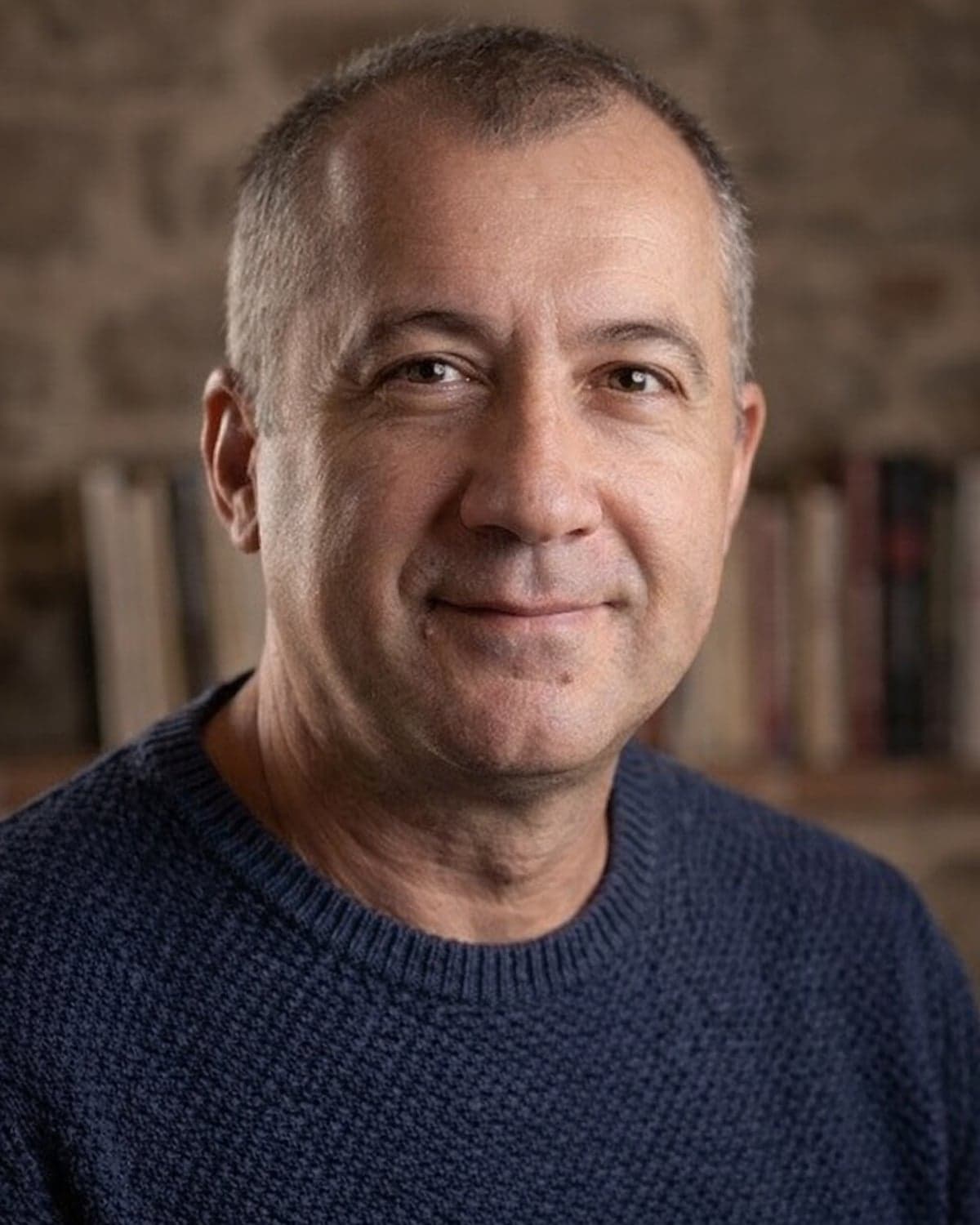
Who I am today
My studio is in Sükösd, in the Bács-Kiskun region of southern Hungary. Painting is my central work. The pieces in my catalogue are made here, and from here they go to the people who choose to live with them.
Beside the painting work, I also teach. Over the years, more than five thousand students have learned painting techniques with me at the KINVA Academy of Art, from oil painting through to pastel. Teaching is not a separate path for me. It is the studio work extended outward. Whatever I encounter in material, in colour, in light, I shape into a system and pass it on.
The third thread is materials research. For years I have been involved in Hungarian paint development collaborations, most recently in shaping the Artemisia art-paint brand.
Three sides of one craft: the painter's work, teaching, the study of materials.
Where I came from
I grew up in Várdomb, Tolna county, in southern Hungary. We moved there from Szekszárd when I was six, and I lived there for decades. The sensual beginning of painting traces back to my fourth year. Our neighbour Lajos placed a window into one of our doorframes, and gave me a piece of glazier's putty. I worked it in my hands for days. The scent of the linseed oil never left me. It came back later, around freshly painted houses, around window frames, in newly whitewashed walls. That scent was the first touch of painting.
I came to actual painting work in October 1999, in the middle of one of the harder consolidations of my twenties. My business had collapsed, my relationship had ended, and I spent four months as a winter caretaker at a horse-riding inn on the Hungarian Plain. Magony Tanya, between Kecskemét and Fülöpháza. Through winter, alone. To this place came the painter Saáry Zoltán, for three weeks of work.
That is where I count my painting from.
Saáry Zoltán showed me the palette, the brushes, the technique of paint, the making of sketches. He placed the first tube of oil paint into my hand. He introduced me to the scent of artist's turpentine, which my memory had been holding in secret since childhood. Three weeks of shared work, and from then on painting was part of my life. Master Saáry passed away in 2015. Our meeting is one of the most often-returning landmarks in my memory.
The painter's path
The turn of 2006 to 2007 came again with crisis. My business had collapsed once more, and I stood before the question: do I go back to mechanical work, or do I try painting full-time. I chose the latter, and from that day on each morning began with paint.
December 2006 brought the first painting sale. An acquaintance, Hédike, came to visit. Her eye caught on a landscape titled „Pecás" (The Angler), which showed a fisherman by the water. I let her have it for five thousand forints. Not a large sum. But the feeling that day was different: someone had paid for what I had made. That same day I picked up the brush again.
This is when the daily practice of painting took hold.
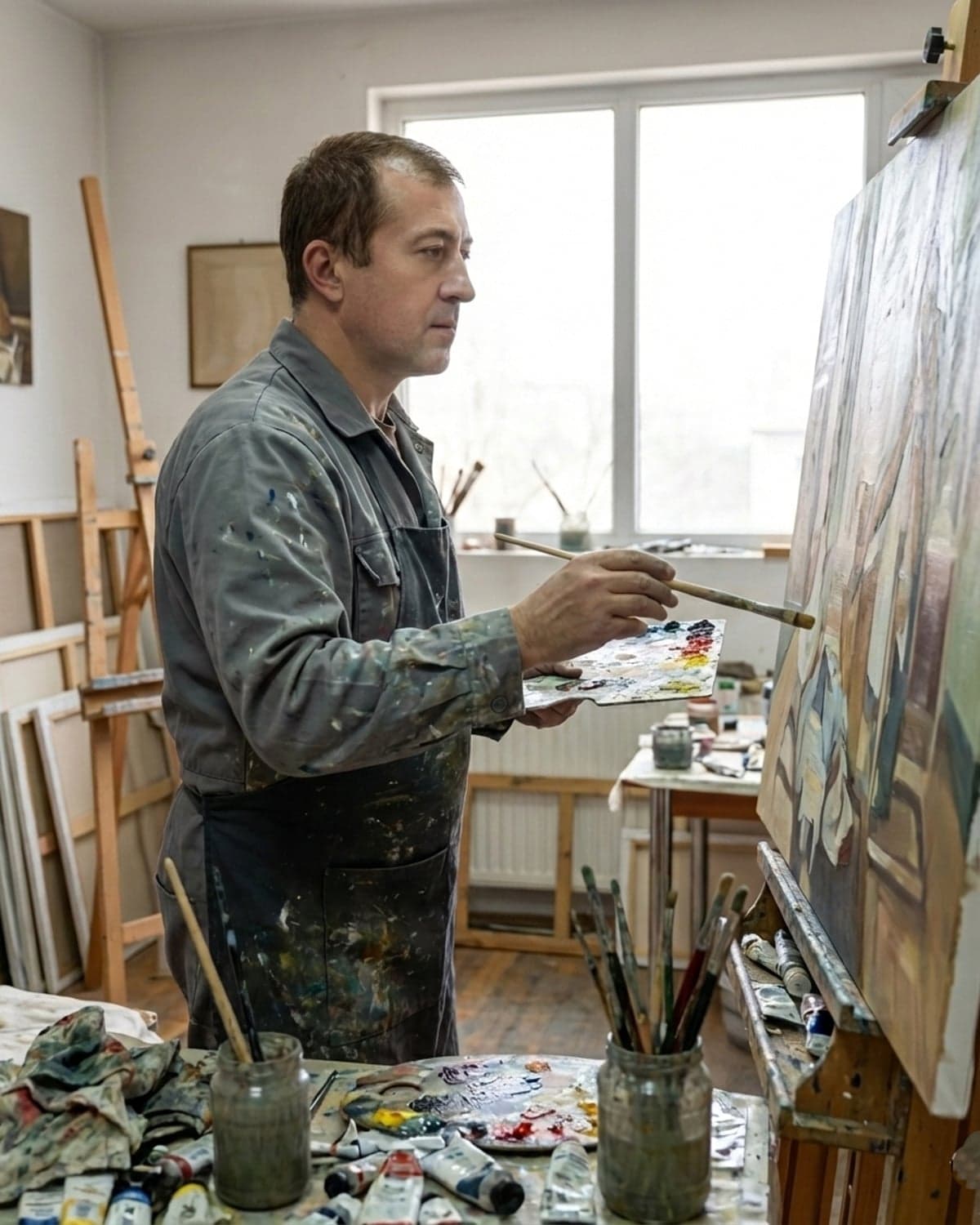
In January 2007 I uploaded six paintings to Vatera, the Hungarian auction site, with one-forint starting bids. By morning there was barely any interest. Then around nine in the evening, in the final minutes, the listings burst into life, and over four days ninety thousand forints came in. From a painter no one had heard of. Two weeks later it was two hundred thousand. From that point I knew I could live from this.
I took the name KINVA at this time. A name-coincidence with another painter required something distinctive, and so the four syllables fused: KrIsztián NAgy Várdombi. Today the name lives its own life. It has become a brand.
The autumn of 2008 brought the first in-person painting course. Ten participants, in Várdomb, in the Old School building. I held it in the same room where I had been a first-year pupil in 1982. I was there at six in the morning, arranging the room, waiting. The first minute I stumbled and stalled. Then, when I reached the cave-painting beginnings of art, I came to familiar ground, and from that moment everything flowed. By the end of the day, ten people had painted their first painting. That is when I understood that this is not only making, but also passing on.
The KINVA Academy
Between 2008 and 2014, I held in-person courses. The schoolroom in Várdomb, small groups, plein-air experiments. Since 2013 the Alsónána Galagonya retreat has been our southern Hungarian workshop. We meet there several times a year, in spring, summer, sometimes in autumn. Plein-air practice, shared studio, shared meals. Margit and Csaba host us.
On the afternoon of August 26th, 2014, a Tuesday, the idea came during a post-lunch siesta. I got up, wrote a newsletter to the readers of my blog: Hungary's first online painting course launches on September 15th. That same night, six payments arrived. In two weeks, sixteen registered. At that point only a few pages of notes existed in my squared notebook.
Long ripening, and then in a single moment, the speed of light.
After twelve years of work, the online catalogue today offers more than a hundred courses. Oil painting, acrylic, pastel, watercolour, ink, drawing, each its own line of work, but the craft is one. Most students return year after year, for new materials and new techniques.
In recent years I have also begun teaching art marketing for painters. In the early 2010s, I learned the basics of online practice from Vida Ági (gazdagmami.hu). The continuation of that arc is that today I pass it on to Hungarian painters. Free creation in painting becomes possible only when the framework of one's living is stable.
Deepening the craft
The materials of painting have occupied me since childhood. Hand-ground oil paint, my own recipes, the material handbooks I prepared for my students, all are stations of this curiosity.
In 2024 the Hungarian paint manufacturer Pentacolor approached me to help develop a new artist-paint brand. I joined the process as external advisor and tester. I passed many of my own recipes to the chemists, and the test variations were built from these. After repeated validation, in late September 2025, the brand made its public debut as Artemisia.
The world's first artist-paint brand to bear the name of a woman painter.
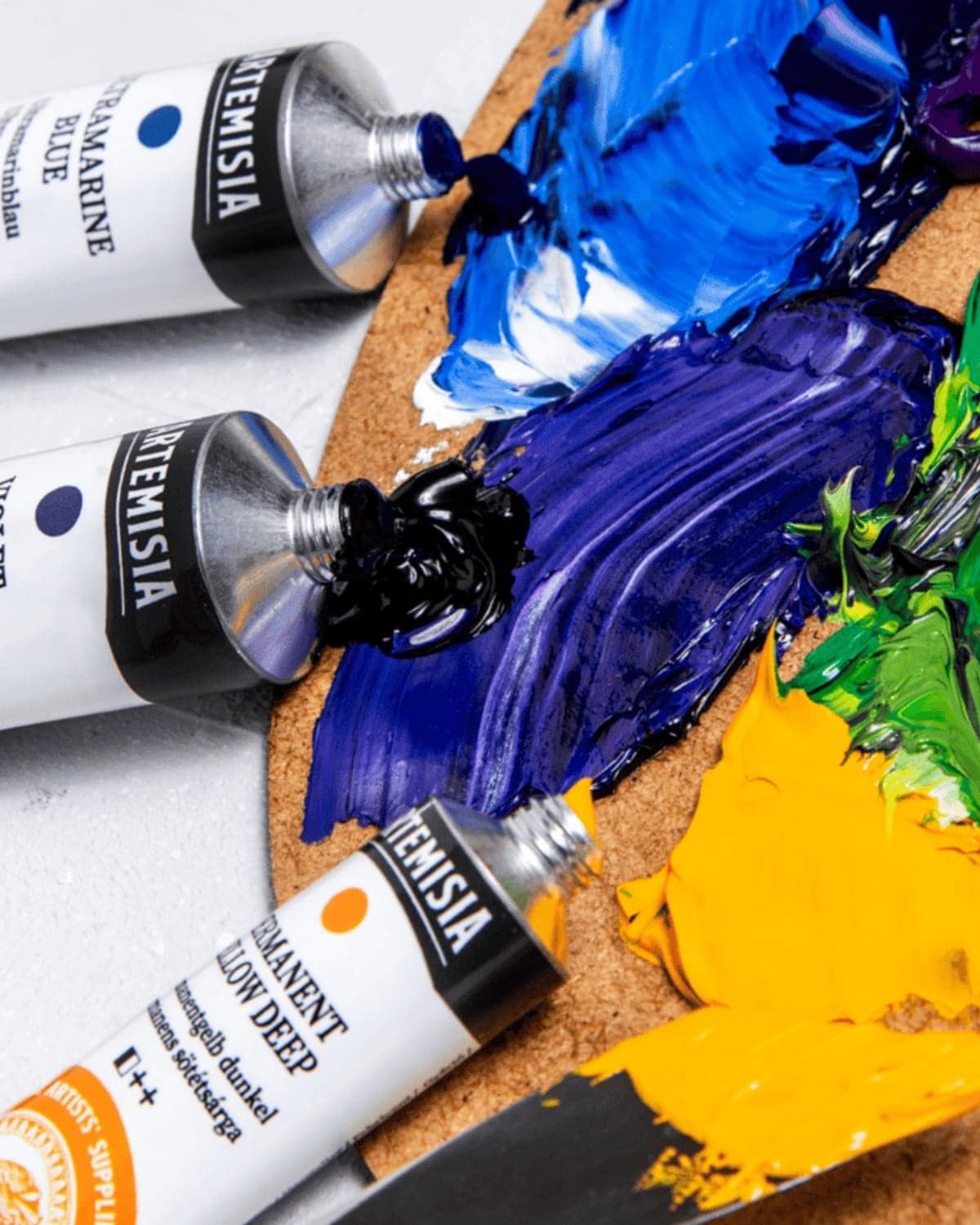
The name honours Artemisia Gentileschi. The 16th-17th century Italian painter, whose own life held both survival and the dignity of craft. As brand ambassador today, I take an active part in the development of the acrylic and oil paint systems and mediums.
The continuity matters to me personally. The window putty of my fourth year and the Artemisia of 2025 are the two outermost points of one and the same curiosity.
Today
Painting, teaching, and the research of materials run alongside each other. My painting catalogue has now been given proper digital ground. The growth of the online teaching material continues. The KINVA AI Workshop subscription launches in May 2026, with a related introductory course on AI as a studio tool in painting. The Artemisia development is ongoing. The Galagonya retreat continues to host several rounds each year.
The thinking behind my work is set out more fully on the Studio Practice & Philosophy page. The four-layered system you find there, Open Study Painting, Meta-resonance, the Mirror-world, and Syncrealism, has ripened on the biographical ground sketched out above.
A quiet historical note.
A few years ago, on a government commission, I painted four flags for the Hungarian Historical Flag Procession. These flags are still in use today at official state ceremonies, in the Parliament, on Kossuth Square, on Heroes' Square. They are carried by the soldiers of the Ludovika Honour Company. This work of mine sits quietly in the everyday life of Hungarian public life.
If you are interested in the full path
I worked through the path I have outlined here in greater depth in my 2021 autobiography, „Így lettem KINVA" (How I Became KINVA). The 220-page book leads from the fourth-year scent memory through to the online launch of 2014. Anyone interested in the thinking behind the studio will find longer material there. The book is available in e-book form. A portion of the income is dedicated to the Kék Vonal Children's Crisis Foundation, a commitment that remains in place.
The painting work and the world of thinking behind it have, however, grown beyond the frame of the book. If you are interested in what is happening now, two paths open from here.